
⏱ 3–4 minute read · THRYVE Org Insights
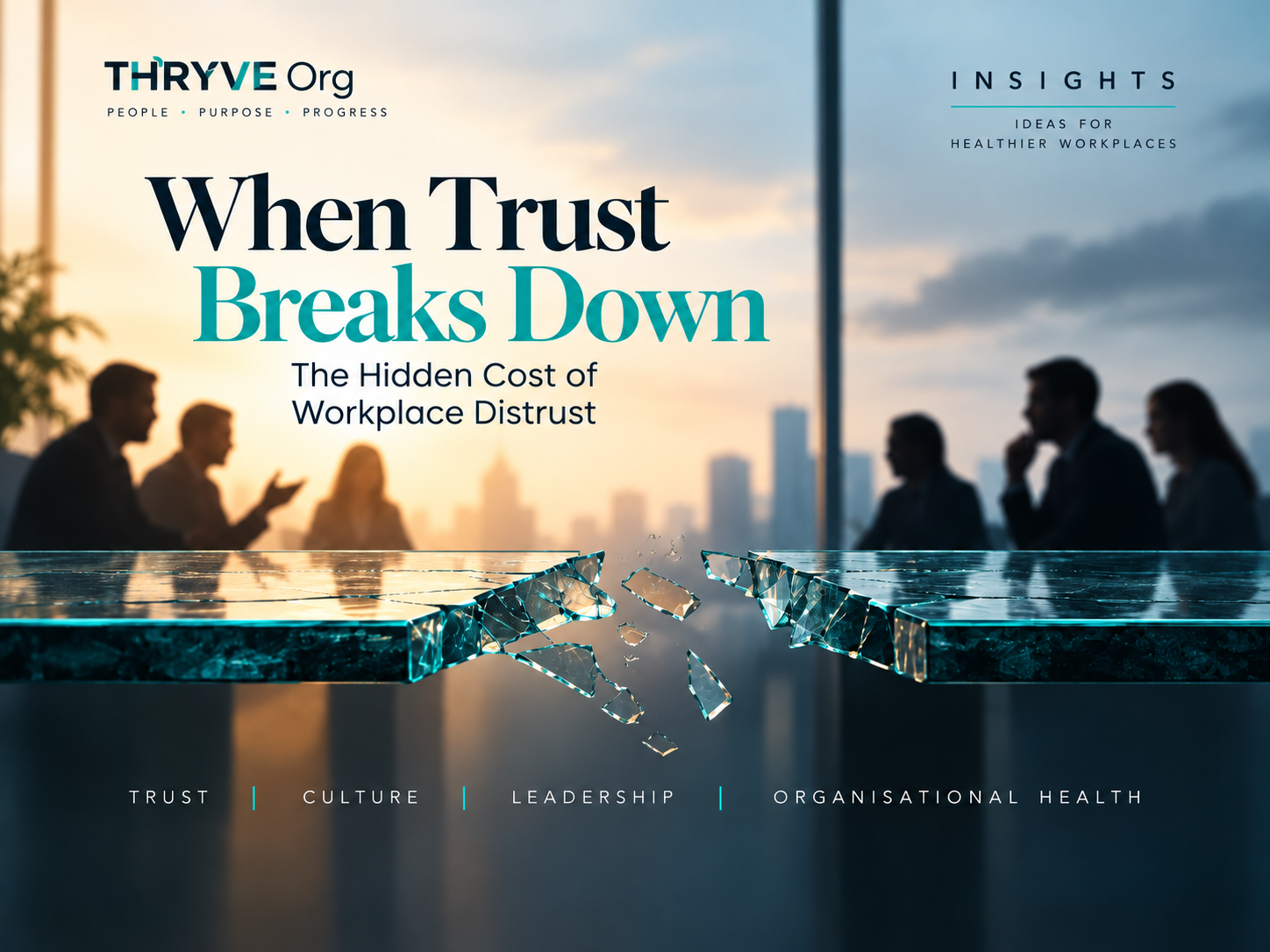
A workplace can look healthy on the surface. Meetings happen. Tasks are completed. People are polite. Yet some questions never get asked, and concerns are discussed privately rather than in the room where decisions are made.
This is one way distrust can quietly reshape a workplace: not always through confrontation, but through hesitation.
Recent Australian data gives leaders a reason to pay attention. PwC’s 2026 Global Workforce Hopes and Fears Survey, based on 1,250 Australian respondents, found that 41% trusted senior management, down from 50% in 2025. Trust in direct managers was 50%, down from 61%.
These survey findings do not explain why trust changed, but they make one question difficult to ignore: what does trust look like in everyday work?
TRUST IS TESTED IN ORDINARY MOMENTS
Trust is not the same as agreement, and it does not mean removing accountability. People may accept difficult decisions when they believe the process was fair, the reasons were explained, and their concerns were taken seriously.
Trust is tested when a leader promises to follow up—and does not. When consultation comes after a decision has effectively been made. Or when similar situations are handled differently without an explanation.
Each incident may appear minor in isolation. Over time, such experiences influence whether people feel that speaking up is worthwhile.
THE HIDDEN COST IS OFTEN SILENCE
Distrust does not always produce visible conflict or immediate resignations. Sometimes employees remain committed to their work but become less willing to offer ideas, challenge assumptions, or raise concerns.
In healthcare, someone might hesitate before escalating a workplace concern. In a school, a staff member may avoid questioning an unrealistic expectation. Elsewhere, teams might implement a change without sharing the practical problems they anticipate.
These are possibilities, not inevitable outcomes. But when people become reluctant to speak, organisations may lose access to valuable information.
Safe Work Australia identifies poor organisational justice—including unfair decision-making, poor information sharing, and disrespectful treatment—as a psychosocial hazard. Trust, therefore, is not only a personal feeling; it is also shaped by how work is organised and how people are treated.
REBUILDING TRUST THROUGH VISIBLE BEHAVIOUR
Trust is rarely restored by a slogan or a single workshop. It develops when people repeatedly see consistency between what leaders say and what they do.
Three practical habits can help:
Explain decisions. People may disagree with an outcome yet understand why it was reached.
Close the feedback loop. When staff share concerns, explain what will change, what cannot change, and why.
Apply standards fairly. Consistency matters most when pressure is high, and decisions are difficult.
None of these practices requires promising that every request will be met. They require honesty, responsiveness, and a willingness to acknowledge mistakes.
A QUESTION WORTH ASKING
Instead of asking only whether employees trust leadership, consider a more practical question:
“Which everyday leadership behaviours give our people good reason to trust us?”
A healthy workplace culture is not built on trust as an abstract aspiration. It is strengthened through decisions, conversations, and follow-through that make trust credible—one interaction at a time.
Sources:
PwC Australia (2026): https://www.pwc.com.au/workforce/hopes-and-fears-survey.html
Safe Work Australia — Poor organisational justice: https://www.safeworkaustralia.gov.au/safety-topic/managing-health-and-safety/mental-health/psychosocial-hazards/poor-organisational-justice
