
Why Workplace Wellbeing Is No Longer Optional: From Compliance to Culture
⏱ 4–5 minute read · THRYVE Org Insights
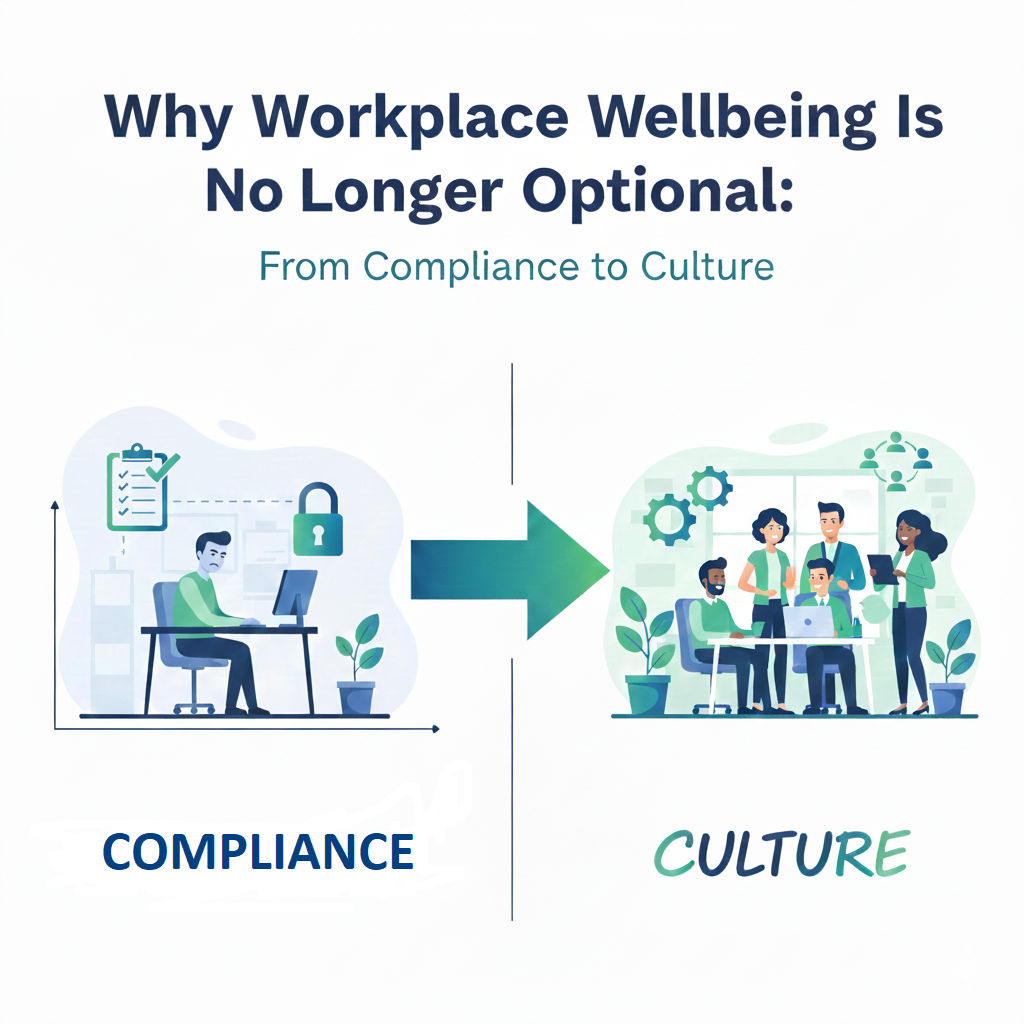
For many years, workplace wellbeing was treated as a “nice to have” — an optional initiative added alongside performance targets, safety policies, and operational priorities. When pressure increased, wellbeing was often the first thing to be postponed or reduced to a short-term program.
That approach is no longer sustainable.
Across industries and countries, organisations are recognising that wellbeing is not separate from performance, safety, or productivity. It is deeply shaped by the environment in which people work — the systems, expectations, leadership behaviours, and cultural norms that influence how work is experienced every day.
The limits of a compliance-only mindset
Traditionally, organisational responses to wellbeing have been driven by compliance. Policies were developed, checklists were completed, and responsibility was often framed in terms of meeting minimum requirements.
While compliance is important, it has clear limitations.
Compliance alone does not tell us whether people feel safe to speak up.
It does not reveal whether workloads are sustainable.
It does not capture how leadership behaviour affects trust, morale, or engagement.
In many workplaces, the formal structures exist, yet strain continues to build quietly — reflected in burnout, disengagement, absenteeism, and staff turnover. These outcomes are rarely the result of individual weakness. They are signals of deeper cultural and systemic issues.
“While compliance is important, it has clear limitations”
Wellbeing is shaped by the work environment
Research consistently shows that wellbeing at work is influenced less by individual resilience and more by organisational conditions. These include:
how work is designed and prioritised
how decisions are communicated
how conflict and mistakes are handled
how leaders respond under pressure
how values are enacted in daily practice
When environments are unclear, reactive, or misaligned, even highly capable and motivated people struggle. Over time, strain becomes normalised, and the organisation adapts to coping rather than thriving.
This is why wellbeing initiatives that focus only on the individual — such as mindfulness sessions or resilience training — often fall short when not supported by broader cultural change.
The shift from compliance to culture
What we are now seeing globally is a shift in expectations. Organisations are being encouraged — and increasingly required — to take a proactive approach to psychosocial safety, wellbeing, and leadership responsibility.
This shift moves the focus:
from reacting to problems, to preventing them
from isolated initiatives, to integrated systems
from policies on paper, to behaviours in practice
from “managing risk”, to designing healthy environments
In this context, workplace wellbeing becomes a cultural matter, not a peripheral program. It is reflected in how people experience work, how leaders lead, and how organisations respond when pressure rises.
Culture is not abstract — it is observable
Culture is often described as something intangible, but its effects are very real and measurable. It shows up in:
patterns of communication
levels of trust and psychological safety
decision-making under stress
staff retention and engagement
energy, collaboration, and innovation
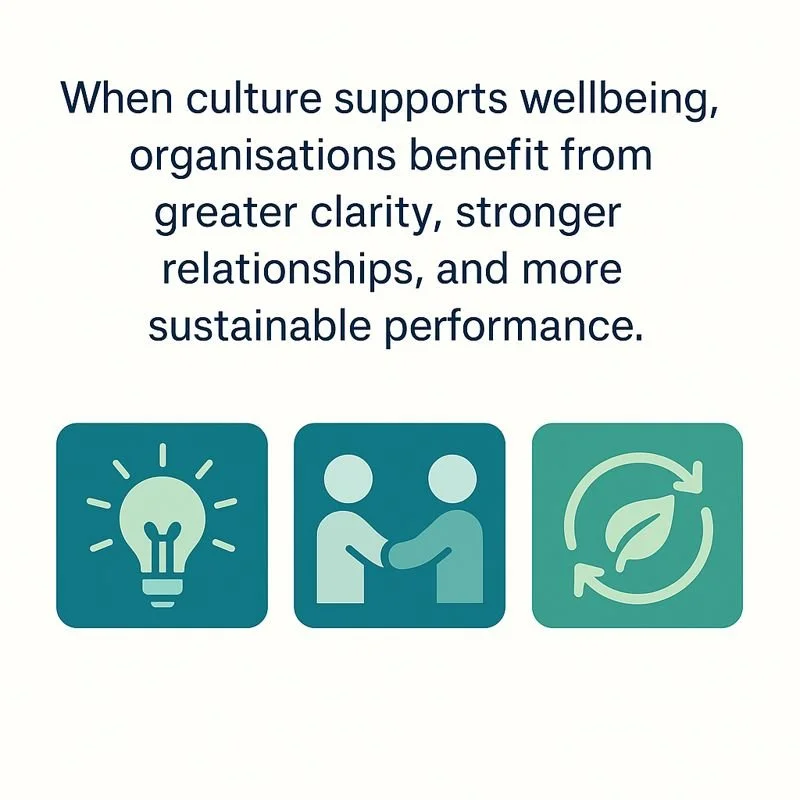
When culture supports wellbeing, organisations benefit from greater clarity, stronger relationships, and more sustainable performance. When it does not, even the best strategies struggle to succeed.
Moving toward sustainable wellbeing
Supporting workplace wellbeing today requires more than meeting obligations or introducing one-off solutions. It requires a structured, evidence-informed approach that looks at the whole system — people, leadership, processes, and purpose.
This is where frameworks and pathway-based approaches become valuable. They help organisations move from awareness to action, and from short-term fixes to embedded, lasting change.
Wellbeing is no longer optional because the cost of ignoring it is too high — for people and for organisations alike. The real question is not whether wellbeing matters, but how intentionally it is designed, supported, and sustained.
